Publications
Neutron Cross Section on Scintillator
Physics Letters B, 2023
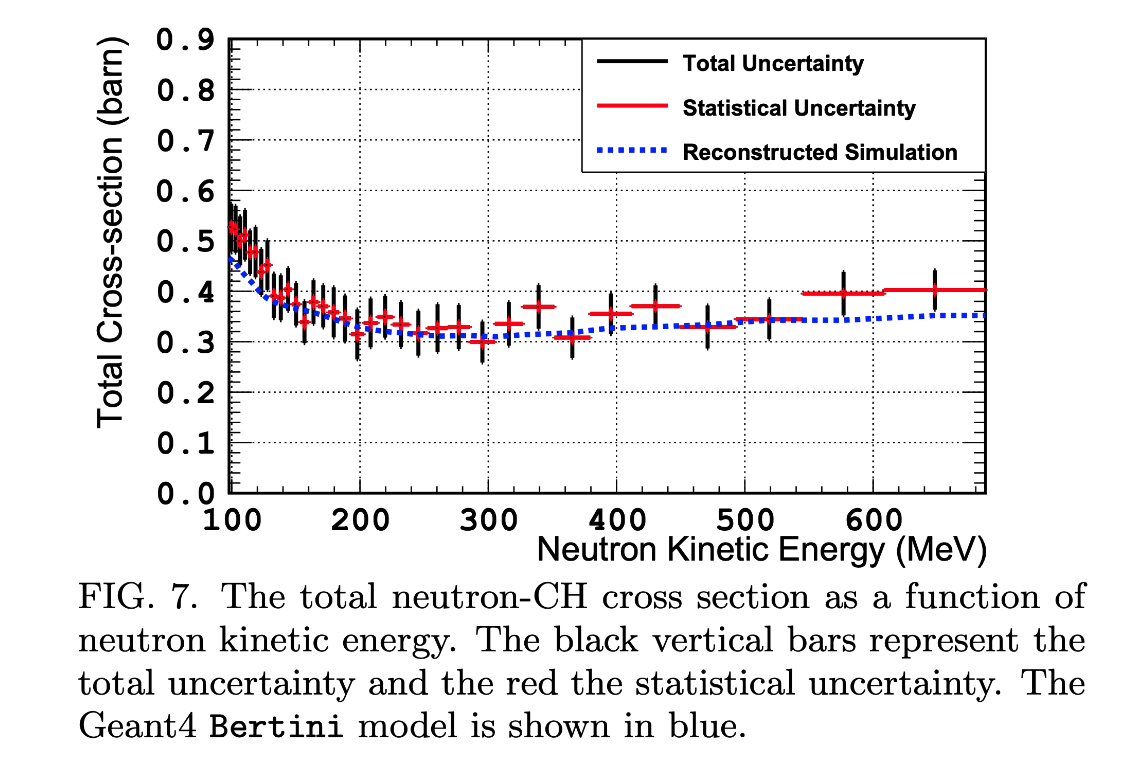
In order to extract neutrino oscillation parameters, precision long-baseline neutrino oscillation experiments rely on detailed models of neutrino interactions with nuclei. These models constitute an important source of systematic uncertainty, partially because detectors to date have been blind to final state neutrons. Three-dimensional projection scintillator trackers comprise components of the near detectors of the next generation long-baseline neutrino experiments. Due to the good timing resolution and fine granularity, this technology is capable of measuring neutron kinetic energy in neutrino interactions on an event-by-event basis and will provide valuable data for refining neutrino interaction models and ways to reconstruct neutrino energy. Two prototypes have been exposed to the neutron beamline at Los Alamos National Laboratory (LANL) in both 2019 and 2020, with neutron energies between 0 and 800 MeV. In order to demonstrate the capability of neutron detection, the total neutron-scintillator cross section is measured and compared to external measurements. The measured total neutron cross section in scintillator between 98 and 688 MeV is 0.36 ± 0.05 barn. Read on ScienceDirect
T2K-NOvA Joint Oscillation Analysis
Nature, 2025
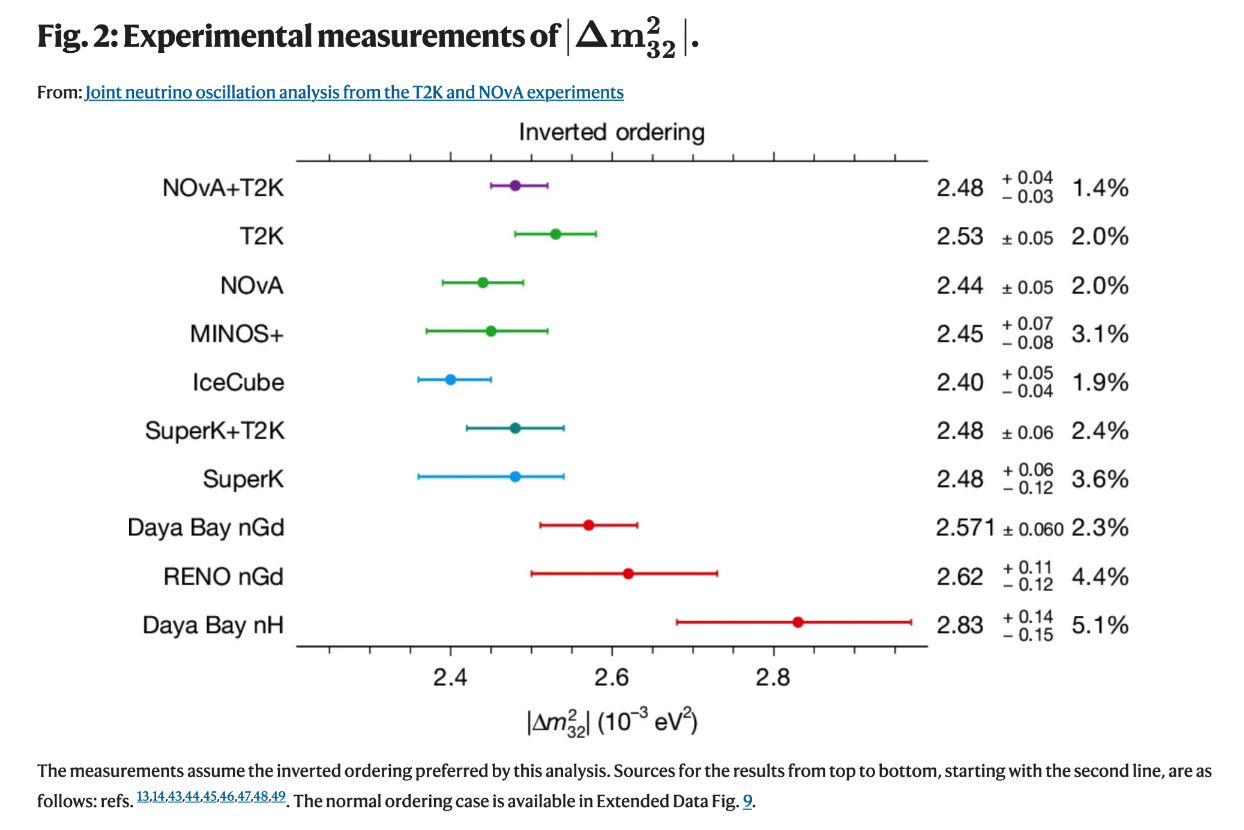
The landmark discovery that neutrinos have mass and can change type (or flavour) as they propagate—a process called neutrino oscillation—has opened up a rich array of theoretical and experimental questions being actively pursued today. Neutrino oscillation remains the most powerful experimental tool for addressing many of these questions, including whether neutrinos violate charge-parity (CP) symmetry, which has possible connections to the unexplained preponderance of matter over antimatter in the Universe. Oscillation measurements also probe the mass-squared differences between the different neutrino mass states (Δm²), whether there are two light states and a heavier one (normal ordering) or vice versa (inverted ordering), and the structure of neutrino mass and flavour mixing. Here we carry out the first joint analysis of datasets from NOvA and T2K, the two currently operating long-baseline neutrino oscillation experiments (hundreds of kilometres of neutrino travel distance), taking advantage of our complementary experimental designs and setting new constraints on several neutrino sector parameters. This analysis provides new precision on the Δm²32 mass difference, finding 2.43−0.03+0.04 × 10⁻³ eV2 in the normal ordering and −2.48−0.04+0.03 × 10⁻³ eV2 in the inverted ordering, as well as a 3σ interval on δCP of [−1.38π, 0.30π] in the normal ordering and [−0.92π, −0.04π] in the inverted ordering. The data show no strong preference for either mass ordering, but notably, if inverted ordering were assumed true within the three-flavour mixing model, then our results would provide evidence of CP symmetry violation in the lepton sector. Read in Nature
Detector Resolution
Journal of Instrumentation, 2023
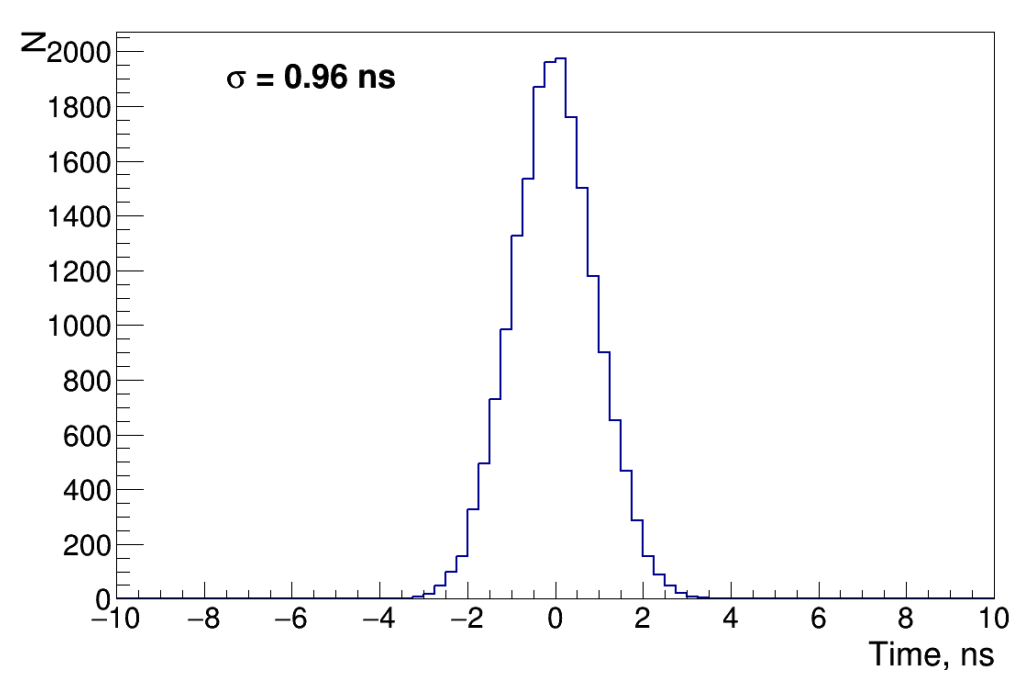
The SuperFGD detector will be a novel and important upgrade to the ND280 near detector for both the T2K and Hyper-Kamiokande projects. The main goal of the ND280 upgrade is to reduce systematic uncertainties associated with neutrino flux and cross-section modeling for future studies of neutrino oscillations using the T2K and Hyper-Kamiokande experiments. The upgraded ND280 detector will be able to perform a full exclusive reconstruction of the final state from neutrino-nucleus interactions, including measurements of low momentum protons, pions and for the first time, event-by-event measurements of neutron kinematics. Precisely understanding the time resolution is critical for the neutron energy measurements and hence an important factor in reducing the systematic uncertainties. In this paper we present the results of time resolution measurements made with the SuperFGD prototype that consists of 9216 plastic scintillator cubes (cube size is 1 cm3) readout with 1728 wavelength-shifting (WLS) fibers along the three orthogonal directions. We used data from a muon beam exposure at CERN. A time resolution of 0.97 ns was obtained for one readout channel after implementing the time calibration with a correction for time-walk effects... Read more on IOPscience
Neutron Detection
Physical Review D, 2023
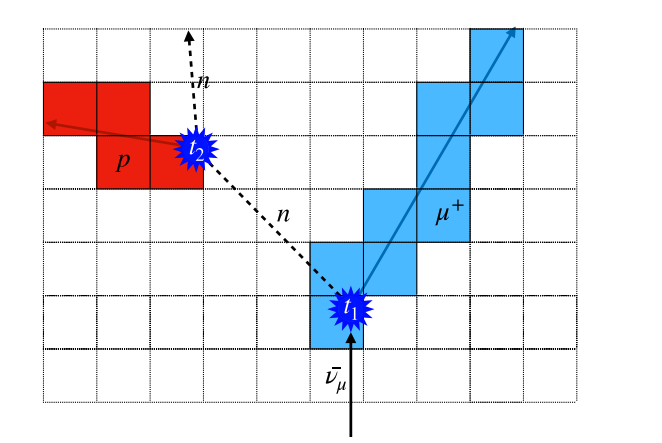
Neutrino oscillation experiments require a precise measurement of the neutrino energy. However, the kinematic detection of the final-state neutron in the neutrino interaction is missing in current neutrino oscillation experiments. The missing neutron kinematic detection results in a feed-down of the detected neutrino energy compared to the true neutrino energy. A novel 3D-projection scintillator tracker, which consists of roughly ten million active cubes covered with an optical reflector, is capable of measuring the neutron kinetic energy and direction on an event-by-event basis using the time-of-flight technique thanks to the fast timing, fine granularity, and high light yield. Antimuon neutrino interactions tend to produce neutrons in the final state. By inferring the neutron kinetic energy, the antimuon neutrino energy can be reconstructed better, allowing a tighter incoming neutrino flux constraint. This paper shows the detector's ability to reconstruct neutron kinetic energy and the antimuon neutrino flux constraint achieved by selecting the charged-current interactions without mesons or protons in the final state. Read in Physical Review D
Charged Particle Beam Test
Journal of Instrumentation, 2020
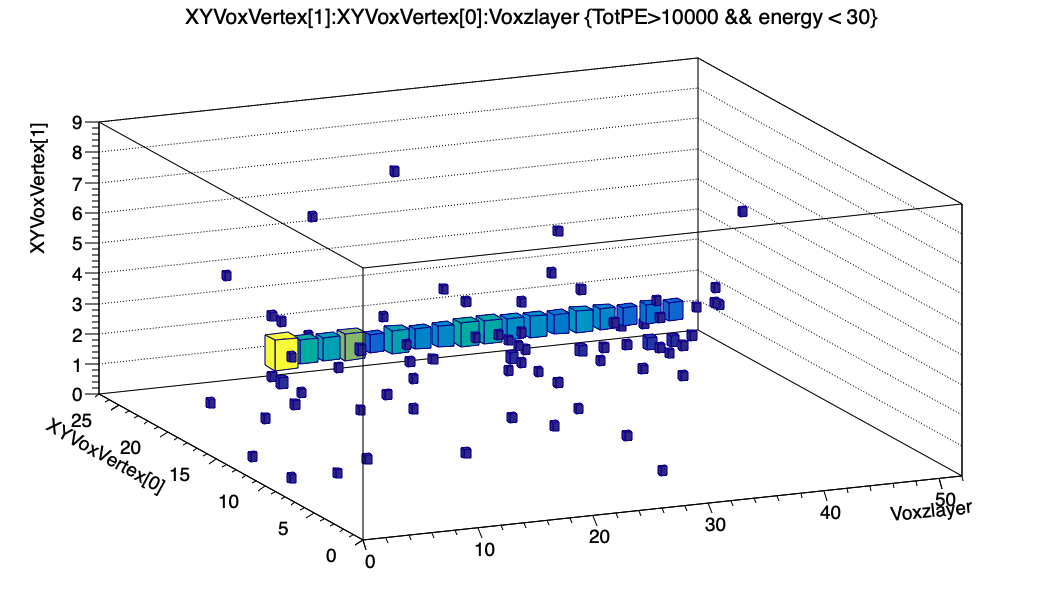
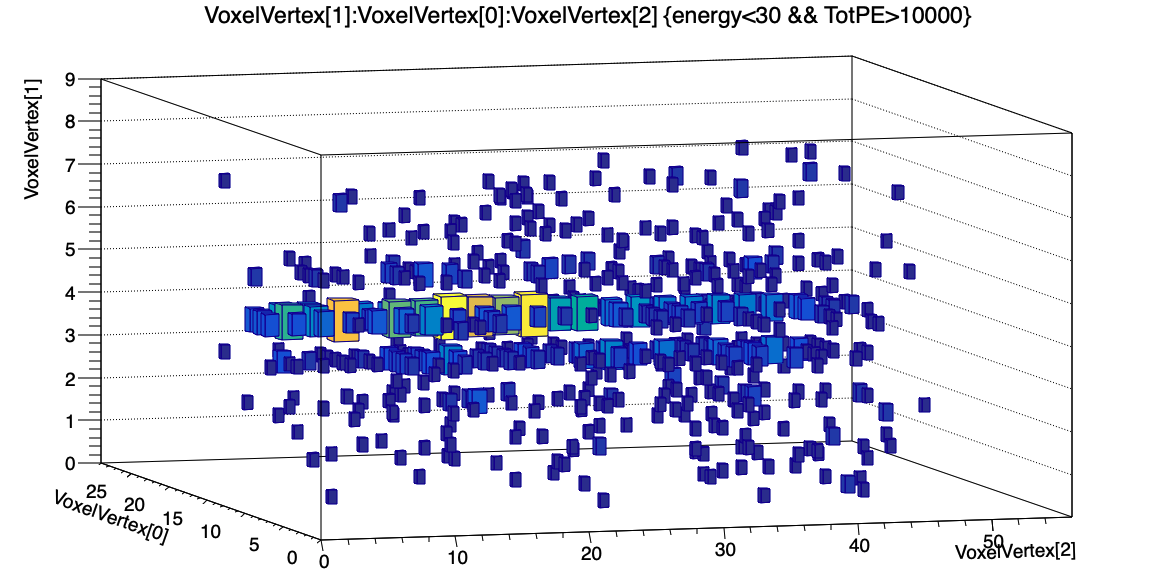
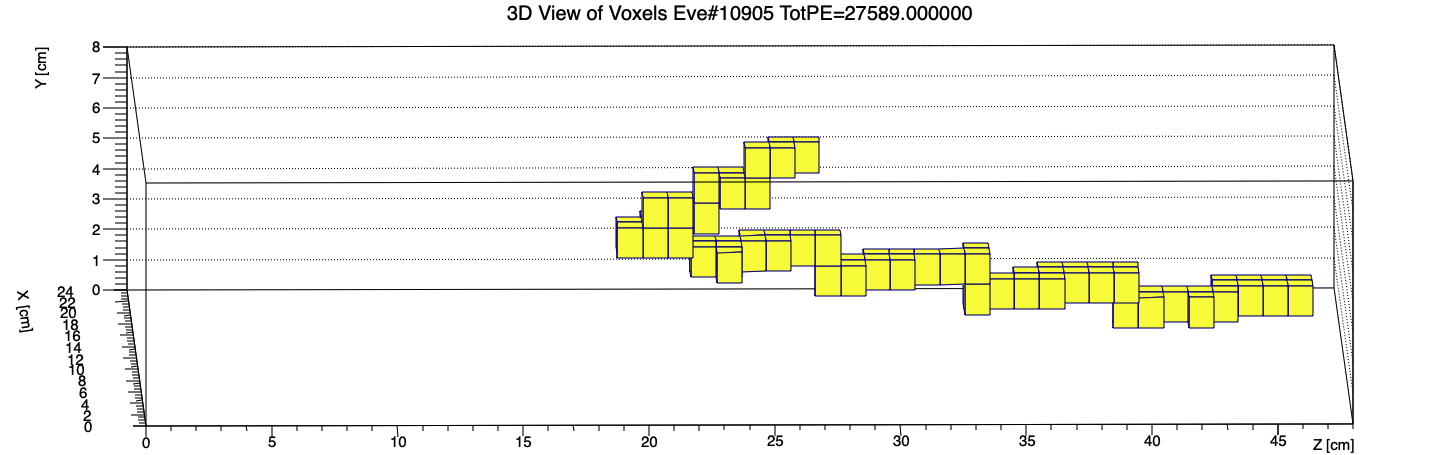
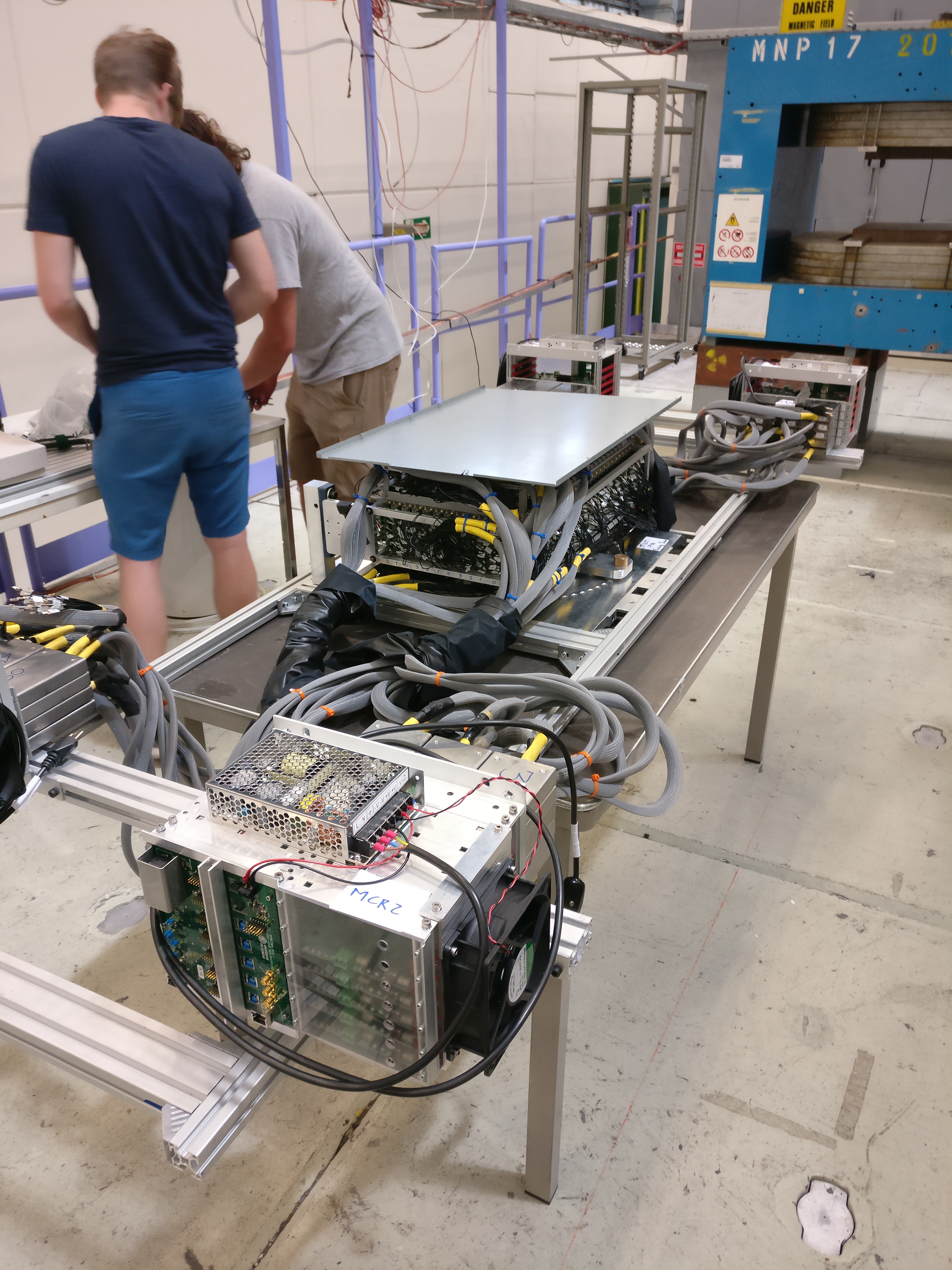
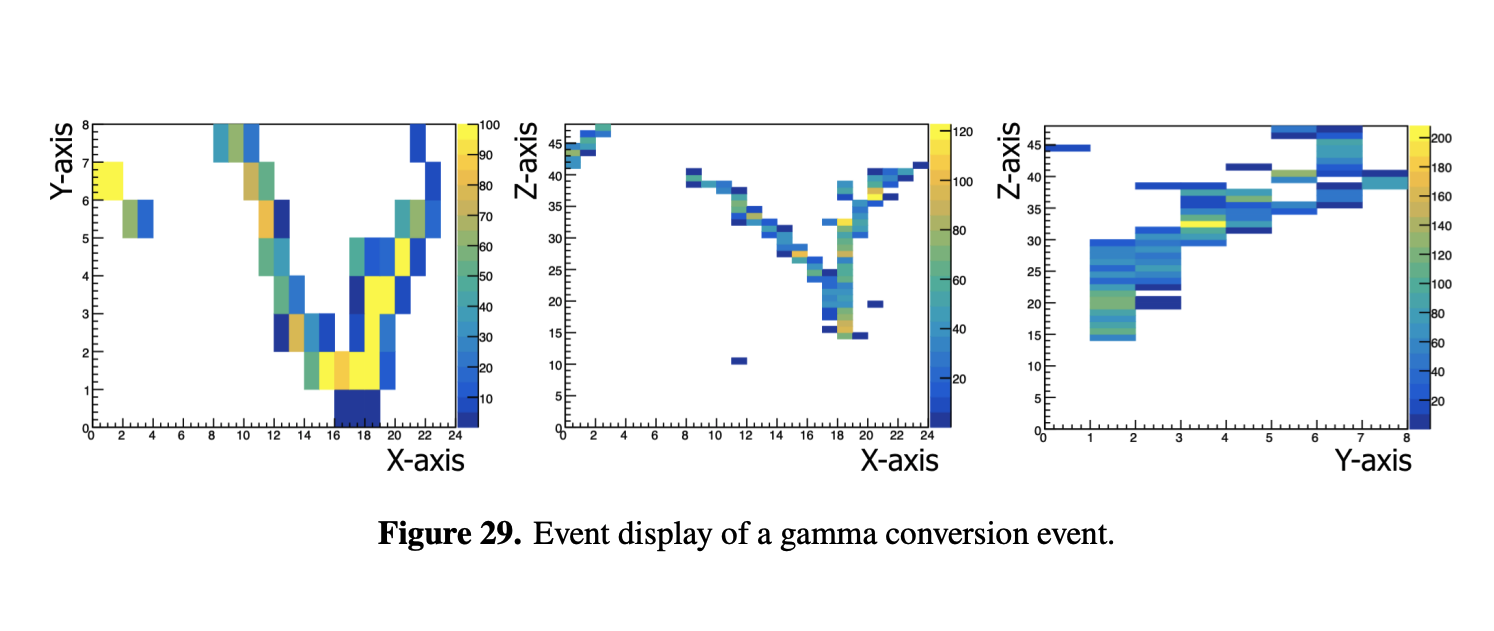
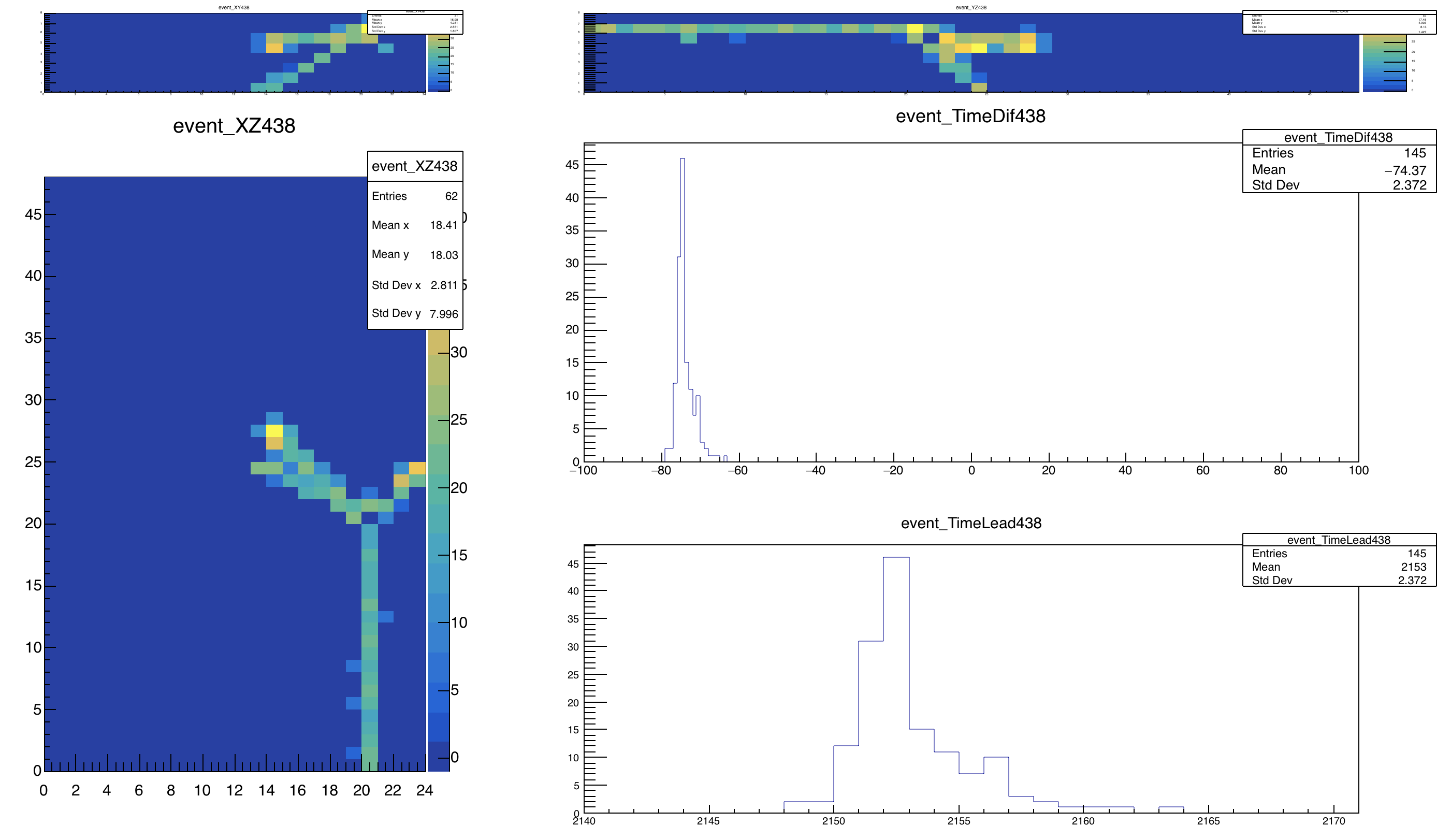
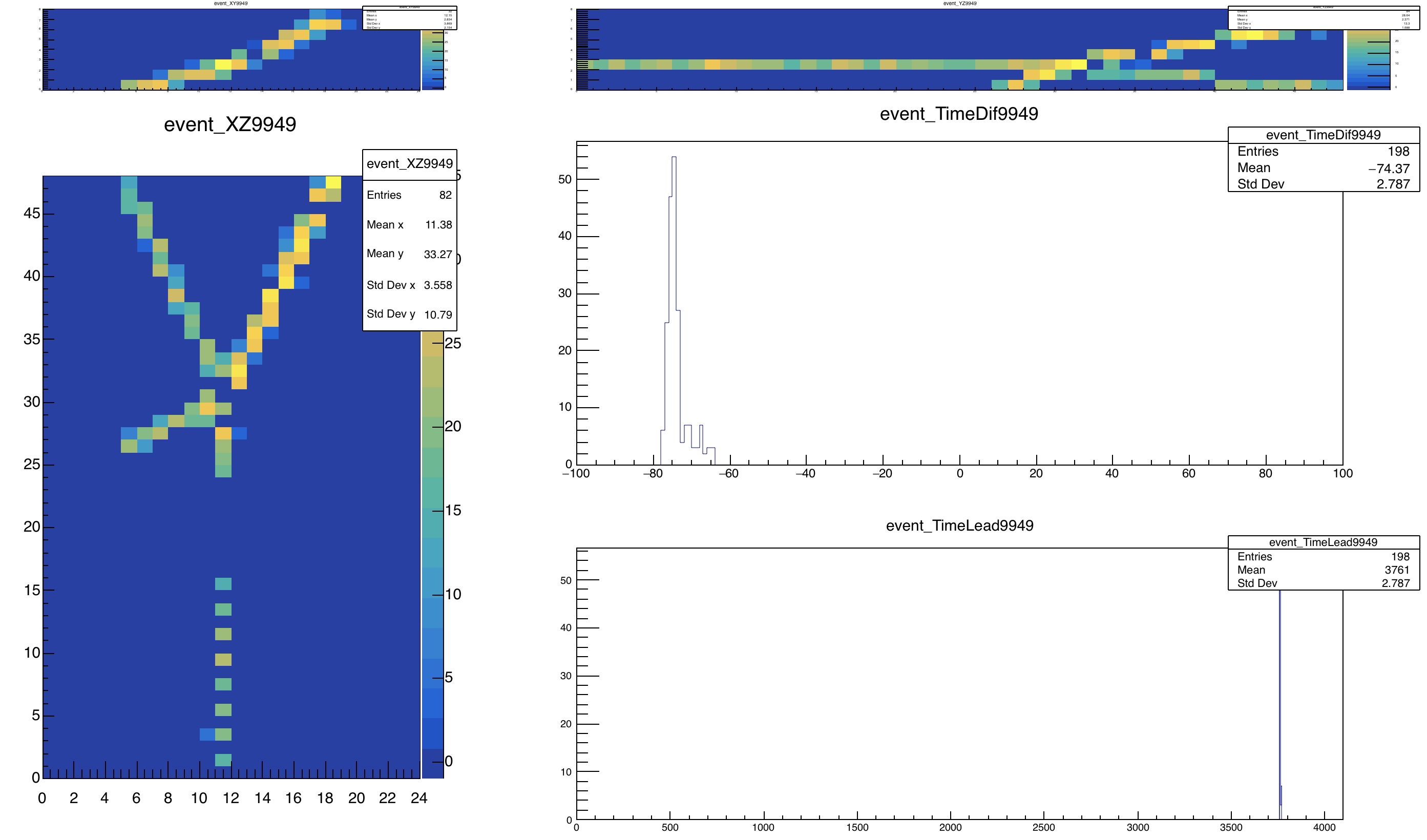
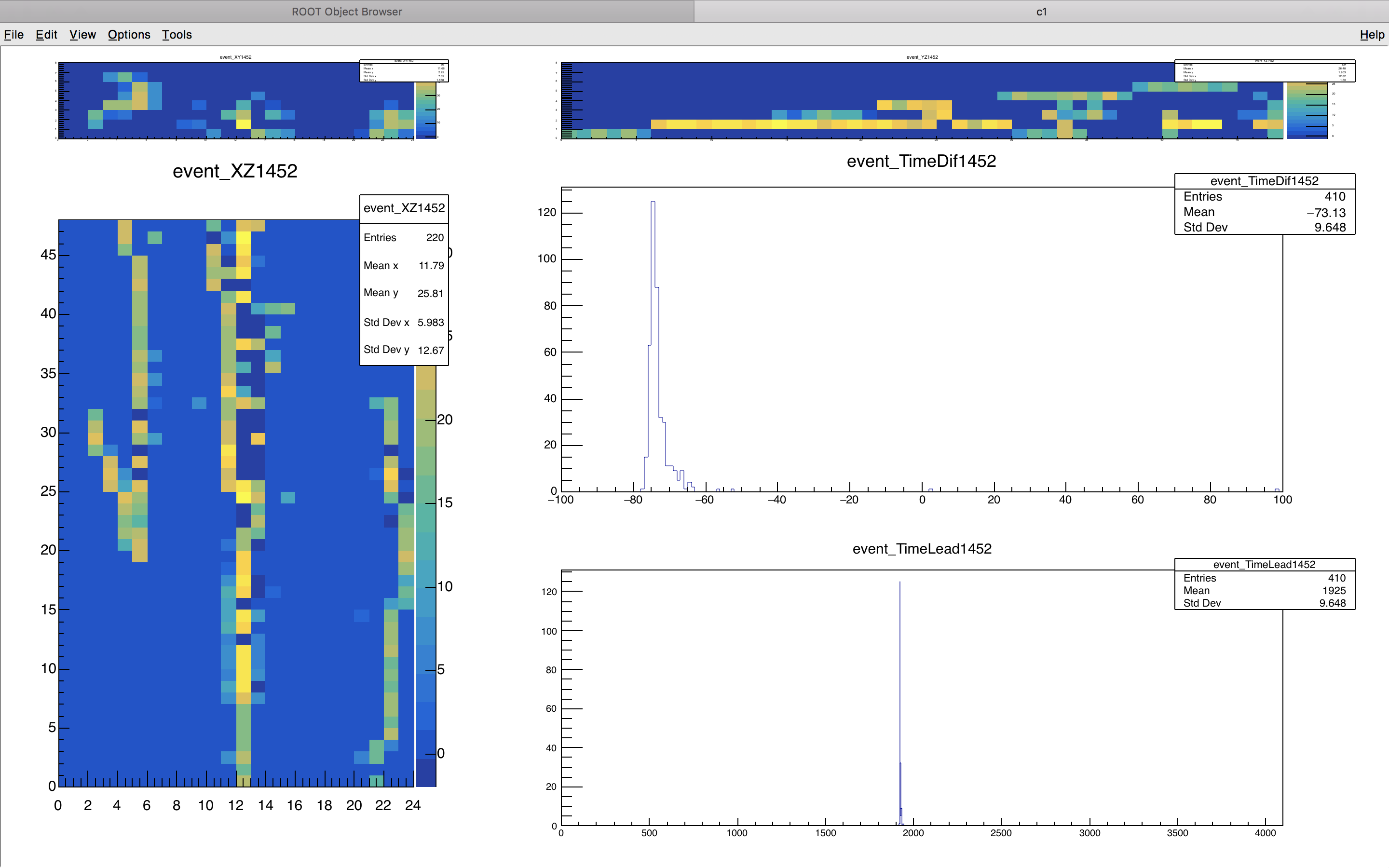
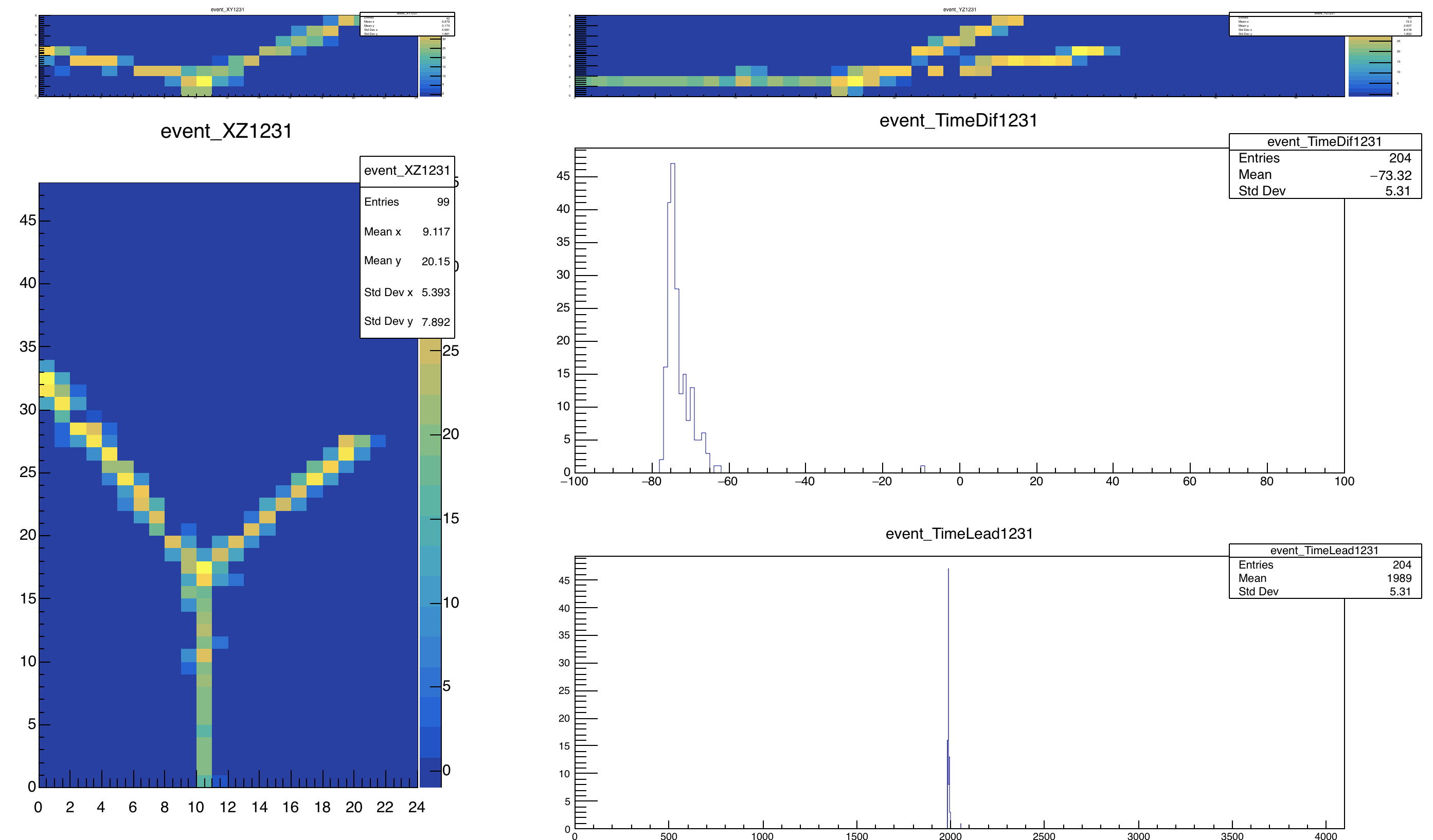
A novel scintillator detector, the SuperFGD, has been selected as the main neutrino target for an upgrade of the T2K experiment ND280 near detector. The detector design will allow nearly 4π coverage for neutrino interactions at the near detector and will provide lower energy thresholds, significantly reducing systematic errors for the experiment. The SuperFGD is made of optically-isolated scintillator cubes of size 10×10×10 mm3, providing the required spatial and energy resolution to reduce systematic uncertainties for future T2K runs. The SuperFGD for T2K will have close to two million cubes in a 1920 × 560 × 1840 mm3 volume. A prototype made of 24 × 8 × 48 cubes was tested at a charged particle beamline at the CERN PS facility. The SuperFGD Prototype was instrumented with readout electronics similar to the future implementation for T2K. Results on electronics and detector response are reported in this paper, along with a discussion of the 3D reconstruction capabilities of this type of detector. Several physics analyses with the prototype data are also discussed, including a study of stopping protons. Read on IOPscience
MINERvA Antineutrino Quasielastic Cross Section
Physical Review D, 2018
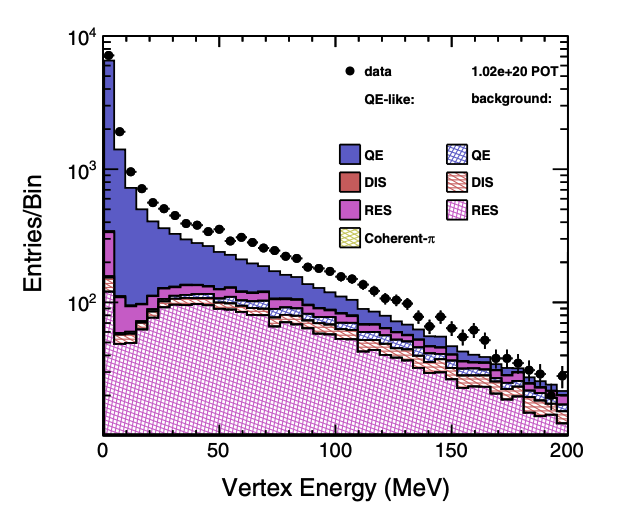
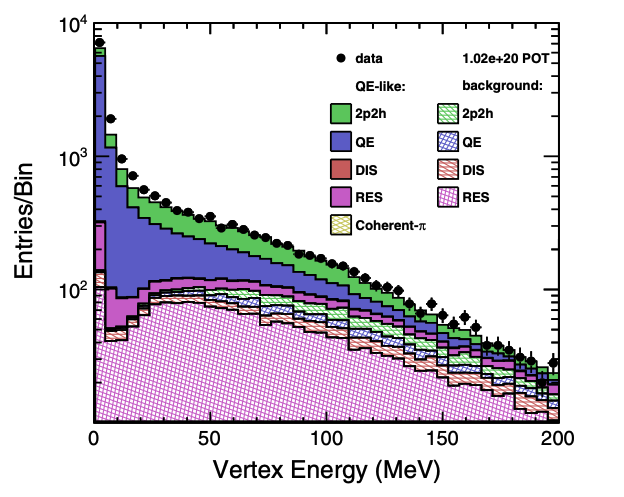
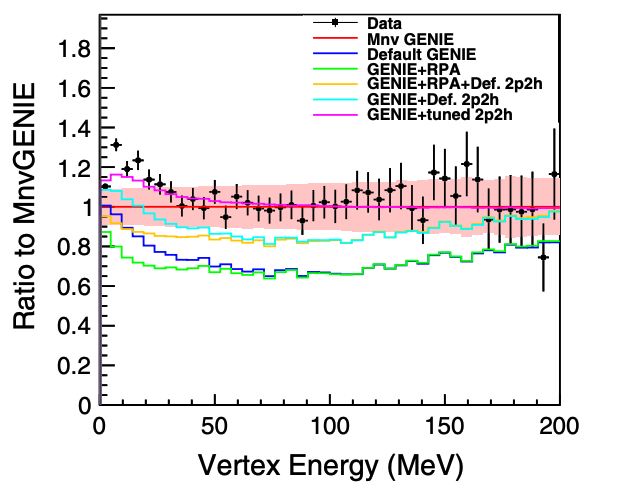
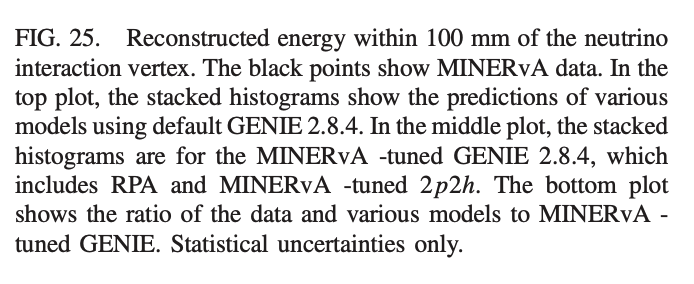
We present double-differential measurements of antineutrino charged-current quasielastic scattering in the MINERvA detector. This study improves on a previous single-differential measurement by using updated reconstruction algorithms and interaction models and provides a complete description of observed muon kinematics in the form of a double-differential cross section with respect to muon transverse and longitudinal momentum. We include in our signal definition zero-meson final states arising from multinucleon interactions and from resonant pion production followed by pion absorption in the primary nucleus. We find that model agreement is considerably improved by a model tuned to MINERvA inclusive neutrino scattering data that incorporates nuclear effects such as weak nuclear screening and two-particle, two-hole enhancements. Read in Physical Review D
APS April Meeting Talk
APS April Meeting, 2020
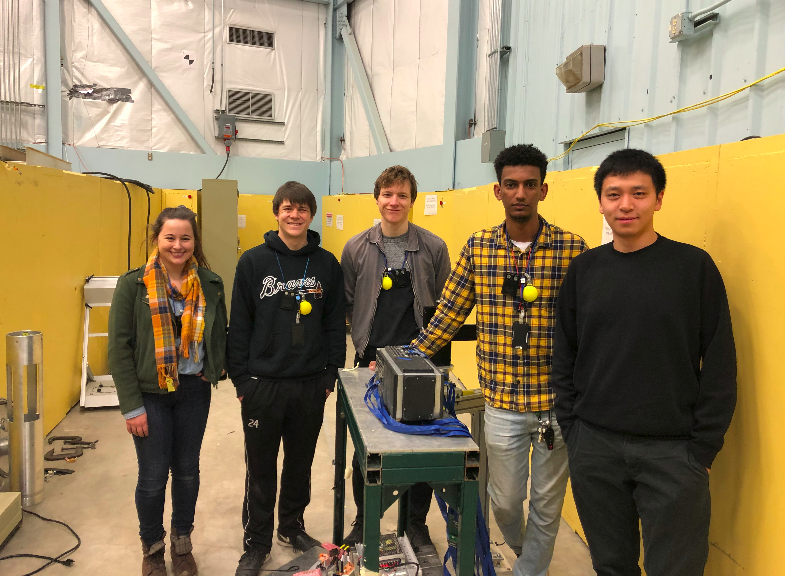
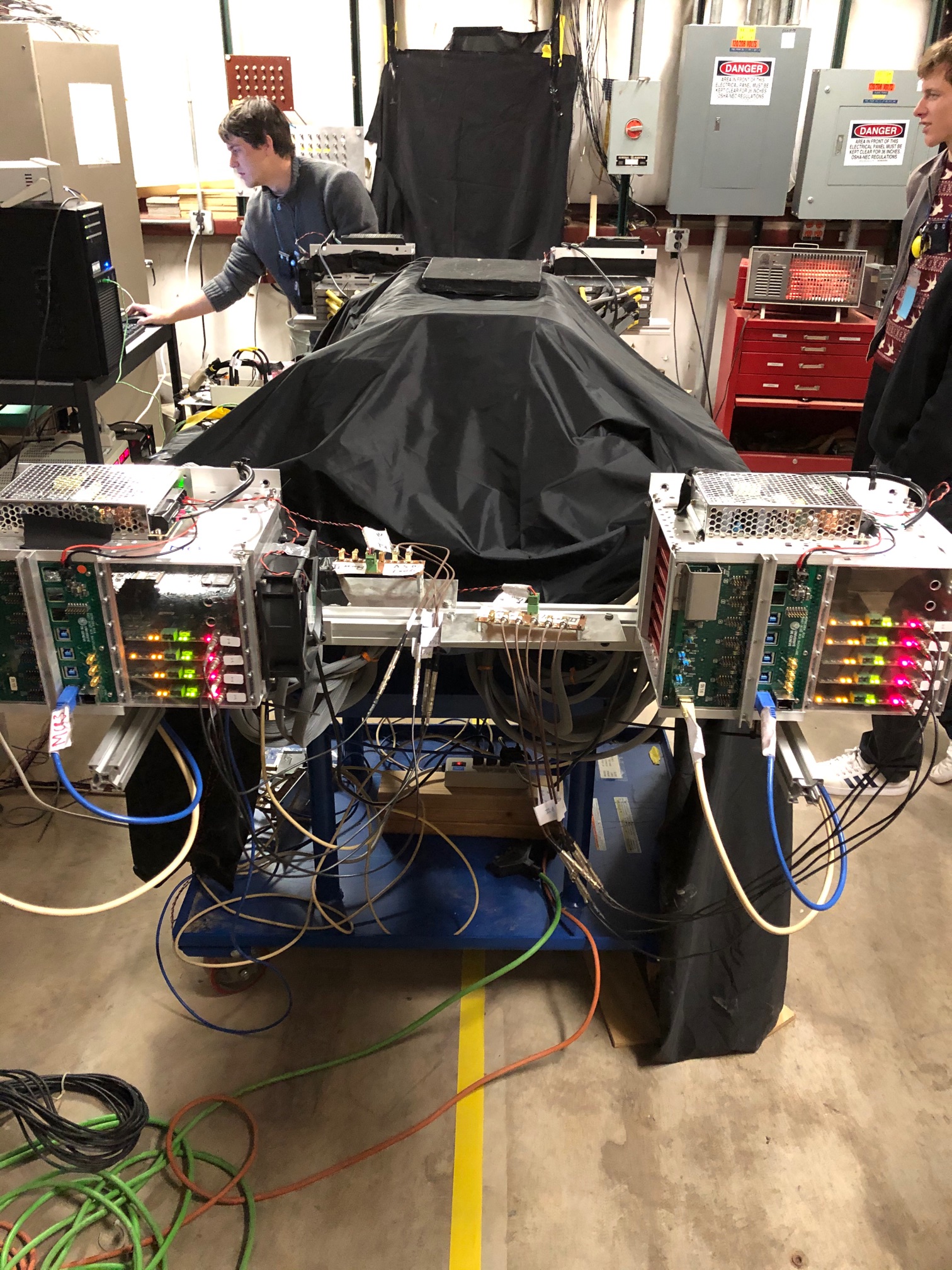
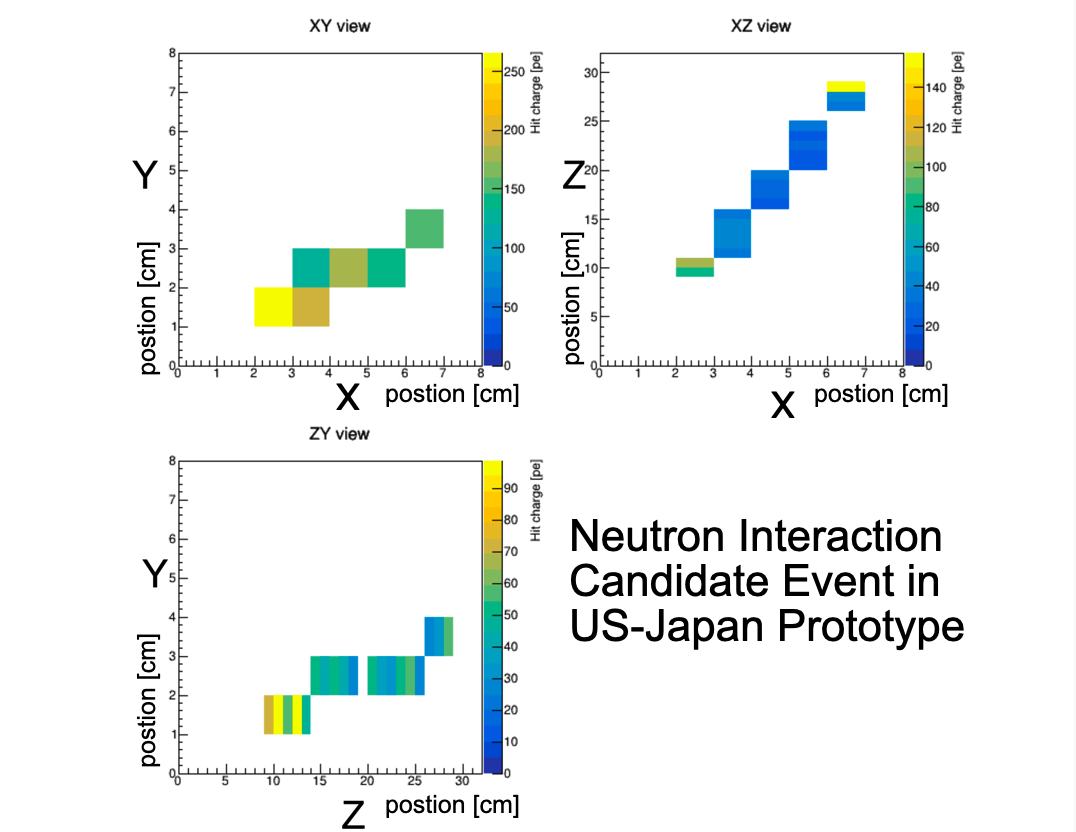
Long baseline neutrino experiments, T2K and DUNE, have introduced a novel three-dimensional projection scintillator tracker as part of the near detector system. SuperFGD (for T2K) and 3DST (for DUNE) have eminent ability to detect neutron kinetic energy, on an event by event basis, which is an important missing piece in the GeV level neutrino experiments. Such a scintillator detector consists of 1 cm × 1 cm × 1 cm cube skewered with three XYZ fibers in each cube. Benefited by the fast timing and low readout threshold, neutron kinematic energies in the neutrino interactions can be measured with the time-of-flight technique. In order to fully demonstrate the neutron detection with such a scintillator detector, two prototypes have been exposed to the neutron beam test facility in the Los Alamos National Lab (LANL). The neutron energy spectrum we can resolve is up to 800 MeV. This is the first-ever test of efficiency of a plastic scintillator detector with pseudo-3D readout in a neutron beam. In this talk, the neutron beam test setup for these prototypes will be described and also the neutron detection performance of the scintillator detector will be shown. View session